Cutler Commentary
Cutler Third Quarter 2026 Market Commentary
October 07, 2026
Sell in May and go away,” is a seasonal market theory that implies stock performance is not as strong over the summer.
Of course, this adage is more conjecture than hard science and this year stocks defied that pessimistic expectation. The S&P 500 TR returned 2.3% in the third quarter, led by a rotation into Artificial Intelligence stocks and continued Energy sector returns. The strength of the AI trade has been resilient in the face of an oil shock (diesel hit an all-time high in the quarter), and higher rates (The Bloomberg Aggregate Bond index declined -3.51% in Q3).
The bottom line: Rates are rising and inflation is proving stubborn, but that also means bonds are once again providing meaningful income. With a handful of AI giants driving much of the market, we continue to favor broad diversification over chasing the latest winners. Our approach hasn't changed: stay disciplined, stay diversified, and let income work for you.
Below we outline three key trends that we are watching at Cutler:
01 The Fed is hiking. Bonds are paying you to wait.
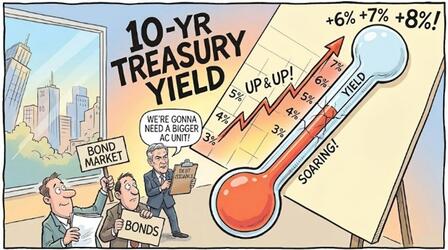
The markets began 2026 expecting rate cuts. Instead, on September 16th, the Federal Reserve raised its benchmark rate a quarter point, to 3.75–4.00%, its first increase since 2023. The reason is straightforward: inflation has remained above target while the labor market has continued to modestly expand. As Chicago Fed President Austan Goolsbee puts it, there is no bad weather, only bad clothing; the Fed is now dressing for the conditions in front of it. We expect a longer hiking cycle, though not necessarily an aggressive one. The 10-year Treasury has climbed from roughly 4.2% at the start of the year to above 5.3% as of this writing. With larger fiscal deficits and nominal (growth including inflation) economic growth near 6.6%, those yields look increasingly reasonable. Bond prices have had a difficult year, but higher yields are now doing more of the work for investors. The Aggregate's current yield translates to roughly 0.42% of income per month (based on the 30-day SEC yield), providing a meaningful cushion against additional price declines. Investors are finally being paid to wait.
02 Oil is in the driver's seat. Watch the consumer, not the headlines.
Energy has been the best-performing S&P 500 sector in 2026, up roughly 40% through early October, as conflict in the Middle East has tightened global energy markets and kept crude prices elevated. The economic question, however, is not simply where oil trades, but how long higher energy costs persist and whether they change consumer behavior. Consumer spending represents roughly 70% of U.S. economic activity, and modestly positive employment and wage income have so far allowed households to absorb higher fuel costs, elevated interest rates, and a housing market already under significant pressure. Mortgage rates above 7% have weighed heavily on housing, yet the broader economy has continued to grow. That keeps our base case at slower, uneven growth rather than recession. The question is, does high gasoline prices, borrowing costs, and inflation gradually erode purchasing power… or is AI spending enough to sustain economic growth?
03 AI: the bubble, if there is one, is likely in earnings expectations.
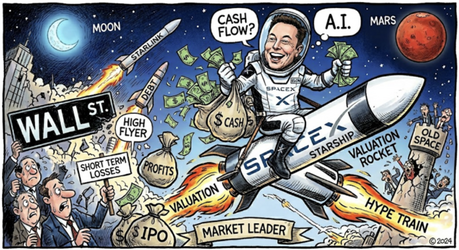
In January, analysts expected S&P 500 earnings to grow about 15% this year. After second-quarter reporting, that estimate had climbed to roughly 32%! While earnings growth has been spectacular, roughly 40% of the second quarter's 50% earnings growth came from unrealized gains held by the largest technology companies in other AI-related businesses, creating a circular ecosystem in which suppliers, customers, and investors increasingly overlap. At the same time, the 20 largest stocks now represent about half of the index. That concentration is a risk, but it is not the whole story: all 11 sectors are now growing earnings, and the market's largest companies have not necessarily been its best performers. Over time, the larger economic benefit from AI may accrue less to the companies building the technology than to the businesses using it to improve productivity, including industrials, materials, financials, and healthcare. This would support our view that diversification is both a way to participate in the AI boom as well as a way to insulate portfolios from the risk of a bubble.
Looking ahead, inflation is likely to be bumpier, bonds once again have attractive yields, and a market increasingly dominated by a handful of companies suggests a benefit for owning broad swaths of stocks, including international equities. (In Europe, for example, the 20 largest stocks account for less than 30% of the index.) Today’s market doesn’t call for dramatic action, but for investors to remain prudent. Portfolio cash flows can “pay you to wait” and while also providing some downside risk support if the AI trade reverses. We believe the current environment supports the disciplines Cutler has practiced since our founding: income, diversification and valuation, applied consistently in today’s very unusual market.
We know markets like this one can raise questions. If you're a Cutler client, we encourage you to reach out to your advisor to talk through how these themes apply to your portfolio. If you're new to Cutler and want to learn how our disciplined approach could work for you, we'd welcome the conversation.
Past performance is not indicative of future results. Different types of investments involve varying degrees of risk, and there can be no assurance that any specific investment or strategy will be profitable or suitable for a particular investor's financial situation or risk tolerance. Investing involves risk, including loss of principal. You cannot invest directly in an index. Asset allocation and portfolio diversification cannot assure or guarantee better performance and cannot eliminate the risk of investment losses. Bond prices generally fall when interest rates rise. International investing involves additional risks, including currency fluctuation and political and economic instability. References to sectors, regions, or asset classes are for illustrative purposes only and are not recommendations. The S&P 500 Index is widely regarded as the best single gauge of large-cap U.S. equities; it includes 500 leading companies and captures approximately 80% coverage of available market capitalization. The MSCI Europe Index captures large- and mid-capitalization representation across developed-market countries in Europe. All opinions and data included in this commentary are as of October 6, 2026, and are subject to change. The opinions and views expressed herein are of Cutler Investment Counsel, LLC and are not intended to be a forecast of future events, a guarantee of future results or investment advice. This report is provided for informational purposes only and should not be considered a recommendation or solicitation to purchase securities. The statistics have been obtained from sources believed to be reliable, but the accuracy and completeness of this information cannot be guaranteed. Neither Cutler Investment Counsel, LLC nor its information providers are responsible for any damages or losses arising from any use of this information.
Tags: global market, volatility, global markets, ai
CATEGORIES

Disclaimer
These blogs are provided for informational purposes only and represent Cutler Investment Group’s (“Cutler”) views as of the date of posting. Such views are subject to change at any point without notice. The information in the blogs should not be considered investment advice or a recommendation to buy or sell any types of securities. Some of the information provided has been obtained from third party sources believed to be reliable but such information is not guaranteed. Cutler has not taken into account the investment objectives, financial situation or particular needs of any individual investor. There is a risk of loss from an investment in securities, including the risk of loss of principal. Different types of investments involve varying degrees of risk, and there can be no assurance that any specific investment will be profitable or suitable for a particular investor's financial situation or risk tolerance. Any forward looking statements or forecasts are based on assumptions and actual results are expected to vary. No reliance should be placed on, and no guarantee should be assumed from, any such statements or forecasts when making any investment decision.